Helping 3rd–5th Grade Students Succeed with STAAR Reading Paired Passages
For many elementary students, STAAR Reading paired passages can feel overwhelming. Two texts, one set of questions, and a lot of thinking required in between. For 3rd, 4th, and 5th grade teachers, the challenge is helping students slow down, organize their thinking, and understand how the two texts connect.
Plus, these passages are worth a lot of points on the STAAR Reading Test. It is very important to be sure that your students are ready for the paired passages.
The good news? Paired passages are a skill we can build gradually—long before test day.
What STAAR Paired Passages Ask Young Readers to Do?
To begin, at the elementary level, paired passages are designed to see if students can:
- Read two texts about the same topic
- Notice similarities and differences
- Compare characters, ideas, or themes
- Use evidence from both passages to answer questions
However, this is big work for young readers, especially those still building stamina and comprehension skills.
Struggles for Students in 3rd-5th grade
Next, teachers usually see the most students struggle with paired passages for several reasons.
Elementary students often:
- Forget details from the first passage
- Mix up information between the two texts
- Answer using only one passage
- Rush because they see more text
Classroom Strategies That Work

1. Start with teaching Compare and Contrast
Students should use a Venn Diagram to correctly compare and contrast the two passages before answering questions.
Compare and Contrast Task Cards are the perfect way for students to discuss the similarities and differences in passages.
Additionally, these task cards can be used in literacy stations and small groups.

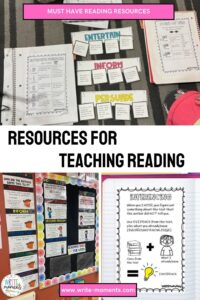
2. Teach Specific Paired Passage Strategies
STAAR stemmed paired passage strategies need to be taught because they can confuse 3rd, 4th, or 5th grade students.
For instance, these STAAR strategies include STAAR-stemmed questions and specific strategy posters to help students think out loud.
In additiona, students must learn how to identify key words like:
- both
- different
- same
- mostly
These words guide students toward the right type of answer and keep them focused.
3. Practice Little and Often
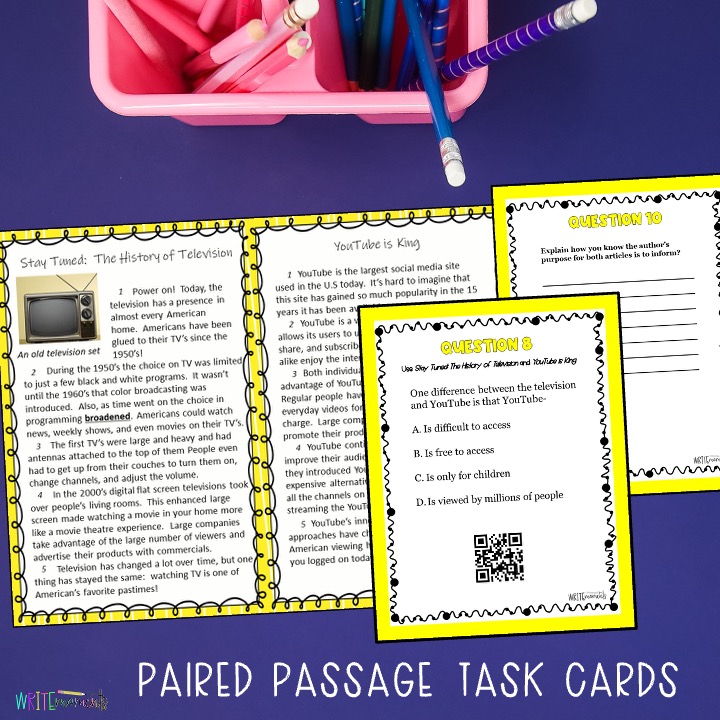
Instead of saving paired passages for test prep season, include short paired texts throughout the year—articles, poems, or stories connected by topic. Frequent exposure builds familiarity and reduces fear.
Then practice STAAR Paired Passages in a variety of different ways: groups, teacher led, and independent.
Finally, use STAAR released passages closer to the STAAR Reading Test.
Supporting Students with STAAR Strategies
Overall, teachers need to be asking the right questions when teaching STAAR Reading Strategies.
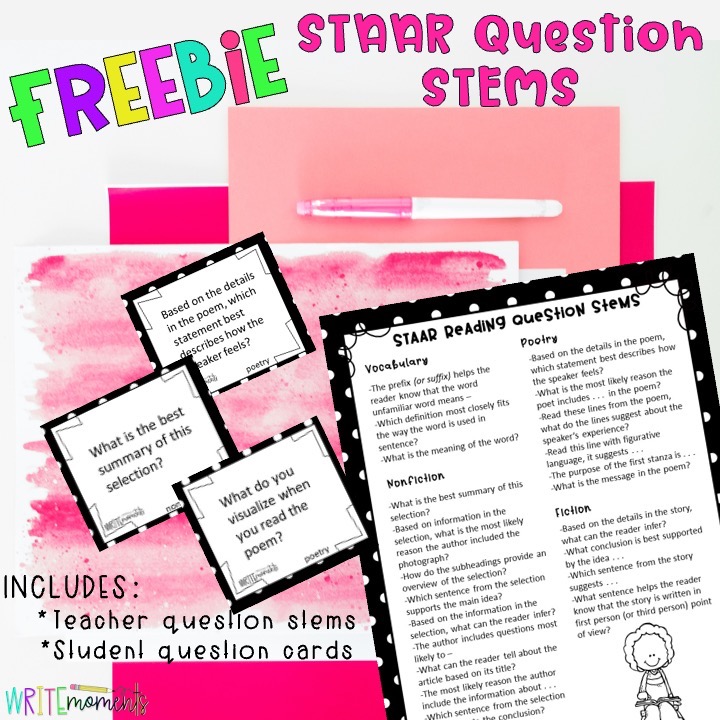
Grab my STAAR questions FREEBIE. This list of STAAR-stemmed questions will work with any text you are using in ELAR
Positive Mindset is Everything
Elementary students need reassurance. Let them know:
- It’s okay to reread
- It’s okay to go back to the text
- Paired passages are about thinking, not speed
Above all, positive mindset is important in succeeding on any assessment. Students must believe they can do it in order to do well.
Asking the right questions is important when teaching STAAR Reading Strategies.
For 3rd, 4th, and 5th grade teachers, STAAR paired passages are more than a test requirement. They’re a powerful way to strengthen comparison, comprehension, and critical thinking skills students will use across content areas.
With clear routines, consistent practice, and simple strategies, paired passages can become a place where students grow—not struggle.
For more information on STAAR Reading Strategies check out my blog posts:
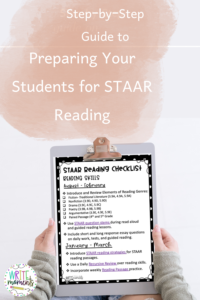
⭐ Step by Step Guide on Preparing Your Students for STAAR Reading